

Ouve este podcast gratuitamente na aplicação: Descarrega gratuitamente na App Store
radio.pt
Sleeptimer
Guardar rádio
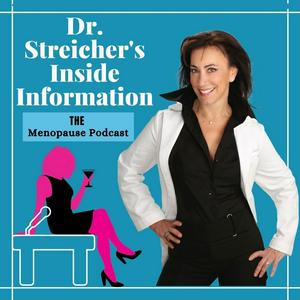
Dr. Streicher’s Inside Information: Menopause, Midlife, and More
Lauren Streicher, MD
Último episódio
156 episódios
S4 Ep200: Perimenopause Problems-an Experts Approach with Dr. Steven Goldstein
23/04/2026 | 53minDuring my hiatus, please join me on Substack for written content and Substack Lives (also available on replay)
Go to substack.com and download the APP
FREE subscribers get access to most content and Subtack LIVEs
PAID subscribers get access to all content, and can attend the monthly ASK ME ANYTHING Webinars.
For a FREE subscription, go to https://drstreicher.substack.com/subscribe.
If you choose to become a PAID subscriber, use this link to subscribe, and you will get 30% off (Discount can be applied for the next week) DrStreicher.Substack.com/podcast200
This is my 200th episode! So I decided to replay a fan favorite.
Dr. Steven Goldstein's perimenopause episode was among the top 5 most downloaded, with good reason.
The only thing predictable about perimenopause is that it is …unpredictable. My guest today is Dr. Steven Goldstein, a tenured professor at NYU's Grossman School of Medicine, the past President of the International Menopause Society, Past President of The Menopause Society, and one of the WORLD’S top experts on the science of perimenopause.
The problem with the standard definition of menopause.
Why bleeding and having a period is not the same thing
Why perimenopausal women bleed erratically
Why anxiety and other symptoms occur during
How to interrupt FSH and estradiol blood levels
The best treatment for perimenopause
Why birth control pills work so well during perimenopause
Myths about birth control pills
The concept of “suppression and substitution”
How long perimenopause lasts
What triggers perimenopause
Why fibroids often grow during perimenopause
How to know if symptoms are perimenopause hormonal fluctuations or something else
How long someone can stay on a birth control pill
When the 12-month rule doesn’t hold
When perimenopause and menopause hit before the age of 40.
When perimenopause hits before 40 why it needs to be treated
Options if someone can’t take birth control pills
When you can ignore irregular bleeding and when it needs to be evaluated
What Black women need to know about perimenopause bleeding
The likelihood of cancer if there is a uterine polyp and you are not bleeding
Link to Steven Goldstein MD
https://www.goldsteinmd.com/services/gynecologist-perimenopause-specialist/
Link to John Rock’s Error Article
Lauren Streicher, MD is a clinical professor of obstetrics and gynecology at Northwestern University’s Feinberg School of Medicine, and the founding medical director of the Northwestern Medicine Center for Sexual Medicine and Menopause and a Senior Research Fellow of The Kinsey Institute, Indiana University. She is a certified menopause practitioner of The Menopause Society.
Dr. Streicher is the medical correspondent for Chicago’s top-rated news program, the WGN Morning News, and has been seen on The Today Show, Good Morning America, The Oprah Winfrey Show, CNN, NPR, Dr. Radio, Nightline, Fox and Friends, The Steve Harvey Show, CBS This Morning, ABC News Now, NBCNightlyNews,20/20, and World News Tonight. She is an expert source for many magazines and serves on the medical advisory board of The Kinsey Institute, Self Magazine, and Prevention Magazine. She writes a regular column for The Ethel by AARP and Prevention Magazine.S4 Ep199: Closing the Mind-Body Libido Gap with Dr. Lori Brotto
09/04/2026 | 52minAs a gynecologist, I help women with the physical, hormonal, and medical aspects of sexual response: eliminate sexual pain, and help women who can’t orgasm due to an SSRI, diabetes or vascular disease. I am not a therapist. I do not treat the psychosocial aspects of sexual difficulties or address the mind-body connection. And that is why the work I do depends on experts like my guest today, Dr. Lori Brotto
Dr. Lori Brotto is a registered psychologist, researcher, and global leader in women’s sexual health. A Professor at the University of British Columbia and Distinguished University Scholar, she has spent more than two decades developing and validating evidence-based treatments for women’s sexual concerns and is widely recognized for pioneering the use of mindfulness in sexual health. She co-developed eSense to translate this body of research into accessible, evidence-based care beyond traditional clinical settings. Dr. Brotto has authored more than 280 scientific publications and is also the author of Better Sex Through Mindfulness and its companion workbook.
In this episode:
Why a sex therapist and medical clinician need to collaborate
How mindfulness helps arousal and libido once there is no pain with sexual activity
How well mindfulness works to increase libido
The difference between mindfulness and cognitive behavioral therapy
Why women avoid sex (besides pain)
The circular sexual response cycle
If most sex therapists are aware of the impact of menopause symptoms
The role of systemic testosterone and libido
The eSense Health tool for individualized digital access to CBT and mindfulness
Why Dr. Brotto developed eSense Health
What eSense is
How eSense works and how well it works
Who eSense is for
How this tool helps women
Living with a cancer diagnosis
PTSD
History of trauma
History of sexual abuse
With different cultural and religious backgrounds
What to expect during an eSense session
The cost of eSense
Linked In https://www.linkedin.com/in/lori-brotto-9974a236/
Instagram @drloribrotto
Information about eSense HEALTH
eSense Health is a digital health company focused on closing the care gap in women’s sexual health. The e-Sense program is based on proven therapeutic approaches, including CBT and mindfulness, and turns them into a structured self-guided experience that women can access privately. It offers support that’s similar to what you might receive in therapy, but in a more accessible and affordable format.
To learn more and sign up for updates, visit: https://esensehealth.com/contact/
IG: https://www.instagram.com/esensehealth/
YouTube:
Episode 195 Vulvar Relief with Dr. Andrew Goldstein
COME AGAIN is a 30-part audio series to address the biological, hormonal, and medical issues that can sabotage your sex life. This solution-driven, science-based guide will help get your libido to kick in and your clitoral nerve endings to wake up.
For more information, go to DrStreicher.com/COMEAGAIN
Dr. Streicher is on SUBSTACK DrStreicher.Substack.com
Articles
Monthly News Flash Reports on recent research
Monthly Zoom Ask Me Anything Webinar
Lauren Streicher MD is a clinical professor of obstetrics and gynecology at Northwestern University’s Feinberg School of Medicine, the founding medical director of the Northwestern Medicine Center for Sexual Medicine and Menopause, and a Senior Research Fellow of The Kinsey Institute, Indiana University. She is a certified menopause practitioner of The Menopause Society.
Dr. Streicher is the medical correspondent for Chicago’s top-rated news program, the WGN Morning News, and has been seen on The Today Show, Good Morning America, The Oprah Winfrey Show, CNN, NPR, Dr. Radio, Nightline, Fox and Friends, The Steve Harvey Show, CBS This Morning, ABC News Now, NBCNightlyNews,20/20, and World News Tonight. She is an expert source for many magazines and serves on the medical advisory board of The Kinsey Institute, Self Magazine, and Prevention Magazine. She writes a regular column for The Ethel by AARP and Prevention Magazine.
LINKS
Subscribe To Dr. Streicher’s Substack
Information About COME AGAIN
Dr. Streicher’s CV and additional bio information
To Find a Menopause Clinician and Other Resources
Glossary Of Medical Terminology
Books by Lauren Streicher, MD
Slip Sliding Away: Turning Back the Clock on Your Vagina-A gynecologist’s guide to eliminating post-menopause dryness and pain
Hot Flash Hell: A Gynecologist's Guide to Turning Down the Heat
Sex Rx- Hormones, Health, and Your Best Sex Ever
The Essential Guide to Hysterectomy
Dr. Streicher’s Inside Information podcast is for education and information and is not intended to replace medical advice from your personal healthcare clinician. Dr. Streicher disclaims liability for any medical outcomes that may occur because of applying methods suggested or discussed in this podcast.S4 Ep198: Preventing Dementia: Estrogen? Testosterone? Prevogen?
25/03/2026 | 23minPreventing Dementia: Estrogen? Testosterone? Prevogen™?
On November 10, 2025, the Secretary of Health and Human Services, Dr. Marty Markary, along with the head of the FDA, RFK Jr, announced that hormone therapy would “reduce Alzheimer’s by 35%."
Where does that statistic come from? And should all women take hormone therapy to stave off dementia later in life?
In this episode, I take a deep dive into the science of hormone therapy and Prevogen™...and what you can do to decrease the risk of Alzheimer's disease by almost 50%.
The impact of hormone therapy on cognition in different phases of life
Current scientific studies to determine if it is beneficial to take hormone therapy to prevent Alzheimers
How best to measure the risk of Alzheimer’s
The “Science” behind Prevogen
How OTC neutraceuticals get past the FDA
Action steps to decrease the risk of Alzheimers
COME AGAIN is a 30-part audio series to address the biological, hormonal, and medical issues that can sabotage your sex life. This solution-driven, science-based guide will help get your libido to kick in and your clitoral nerve endings to wake up.
For more information, go to DrStreicher.com/COMEAGAIN
Dr. Streicher is on SUBSTACK DrStreicher.Substack.com
Articles
Monthly News Flash Reports on recent research
Monthly Zoom Ask Me Anything Webinar
Lauren Streicher MD, is a clinical professor of obstetrics and gynecology at Northwestern University’s Feinberg School of Medicine, the founding medical director of the Northwestern Medicine Center for Sexual Medicine and Menopause, and a Senior Research Fellow of The Kinsey Institute, Indiana University. She is a certified menopause practitioner of The Menopause Society.
Dr. Streicher is the medical correspondent for Chicago’s top-rated news program, the WGN Morning News, and has been seen on The Today Show, Good Morning America, The Oprah Winfrey Show, CNN, NPR, Dr. Radio, Nightline, Fox and Friends, The Steve Harvey Show, CBS This Morning, ABC News Now, NBCNightlyNews,20/20, and World News Tonight. She is an expert source for many magazines and serves on the medical advisory board of The Kinsey Institute, Self Magazine, and Prevention Magazine. She writes a regular column for The Ethel by AARP and Prevention Magazine.
LINKS
Subscribe To Dr. Streicher’s Substack
Information About COME AGAIN
Dr. Streicher’s CV and additional bio information
To Find a Menopause Clinician and Other Resources
Glossary Of Medical Terminology
Books by Lauren Streicher, MD
Slip Sliding Away: Turning Back the Clock on Your Vagina-A gynecologist’s guide to eliminating post-menopause dryness and pain
Hot Flash Hell: A Gynecologist's Guide to Turning Down the Heat
Sex Rx- Hormones, Health, and Your Best Sex Ever
The Essential Guide to Hysterectomy
Dr. Streicher’s Inside Information podcast is for education and information and is not intended to replace medical advice from your personal healthcare clinician. Dr. Streicher disclaims liability for any medical outcomes that may occur because of applying methods suggested or discussed in this podcast.S4 Ep197: Don't Be SKIN-fluenced! A Q and A with Dr. Ellen Gendler
12/03/2026 | 59minIn the world of medical influencers, the only thing crazier than the menopause world is the skin world. There are a lot of people who are making millions selling lotions and potions that promise to make your 50-year-old skin look like it did when you were 20.
Enter Dr. Ellen Gendler- you know her-the New York dermatologist who is the voice of reason, and wildly entertaining, but most importantly, the voice of science in a sea of skin-fluencers.
I asked for your questions, and you delivered!
SO strap in for this rapid fire Q and A!
Some of the topics we covered:
Microneedling
Loose skin
Crepey skin
Peptides
Skin brighteners
Hydroquinone
Brown spots
Itchy skin
Plumping earlobes
Sunscreen
Face injections
Thinning hair
Ketoconazole shampoo
Oral minoxidil
Scalp massage
Nutrafol
Shampoo
Droopy eyes vs droopy brows
Marionette lines
Fillers
And so much more...
Dr. Ellen Gendler is a Clinical Associate Professor of Dermatology at NYU Langone Medical Center
Insta: @ellengendlermd
Episode 117 Top Tips for Terrific Skin & Hair with Dr. Ellen Gendler
COME AGAIN is a 30-part audio series to address the biological, hormonal, and medical issues that can sabotage your sex life. This solution-driven, science-based guide will help get your libido to kick in and your clitoral nerve endings to wake up.
For more information, go to DrStreicher.com/COMEAGAIN
Dr. Streicher is on SUBSTACK DrStreicher.Substack.com
Articles
Monthly News Flash Reports on recent research
Monthly Zoom Ask Me Anything Webinar
Lauren Streicher MD, is a clinical professor of obstetrics and gynecology at Northwestern University’s Feinberg School of Medicine, the founding medical director of the Northwestern Medicine Center for Sexual Medicine and Menopause, and a Senior Research Fellow of The Kinsey Institute, Indiana University. She is a certified menopause practitioner of The Menopause Society.
Dr. Streicher is the medical correspondent for Chicago’s top-rated news program, the WGN Morning News, and has been seen on The Today Show, Good Morning America, The Oprah Winfrey Show, CNN, NPR, Dr. Radio, Nightline, Fox and Friends, The Steve Harvey Show, CBS This Morning, ABC News Now, NBCNightlyNews,20/20, and World News Tonight. She is an expert source for many magazines and serves on the medical advisory board of The Kinsey Institute, Self Magazine, and Prevention Magazine. She writes a regular column for The Ethel by AARP and Prevention Magazine.
LINKS
Subscribe To Dr. Streicher’s Substack
Information About COME AGAIN
Dr. Streicher’s CV and additional bio information
To Find a Menopause Clinician and Other Resources
Glossary Of Medical Terminology
Books by Lauren Streicher, MD
Slip Sliding Away: Turning Back the Clock on Your Vagina-A gynecologist’s guide to eliminating post-menopause dryness and pain
Hot Flash Hell: A Gynecologist's Guide to Turning Down the Heat
Sex Rx- Hormones, Health, and Your Best Sex Ever
The Essential Guide to Hysterectomy
Dr. Streicher’s Inside Information podcast is for education and information and is not intended to replace medical advice from your personal healthcare clinician. Dr. Streicher disclaims liability for any medical outcomes that may occur because of applying methods suggested or discussed in this podcast.S4 Ep196: An Intimate Conversation with the Author of The Intimate Animal, Dr. Justin Garcia
26/02/2026 | 53minIn this episode, join me in my living room for a conversation between me, Christie Hefner, and the author of a just released book, Intimate Animal by Justin Garcia, an evolutionary biologist and international authority on the science of sex and relationships and the Executive Director of the world-renowned Kinsey Institute.
The Intimate Animal explores: Why we love who we love? Why do we stay in unfulfilling relationships and stray from rewarding ones? Is it ever a good idea to open a relationship? How has the digital age affected courtship? And why do some longtime couples crash and burn while others stay madly in love?
The difference between intimacy and sex
If evolution is driven by sex or intimacy
Dating in a digital world
If ending a relationship is the same as a failed relationship
The number one thing people are looking for in a partner
..and much more
Dr. Justin Garcia is an evolutionary biologist and international authority on the science of sex and relationships. Since 2019, he has served as the Executive Director of the world-renowned Kinsey Institute, where he is also a Senior Scientist. Dr. Garcia holds a Ph.D. in evolutionary biology and M.S. in biomedical anthropology from Binghamton University and an Executive Certificate in Public Leadership from Harvard Kennedy School.
Dr. Garcia is currently the Chief Scientific Advisor to Match where he provides expertise for the annual Singles in America study. He has co-authored over 100 academic articles and book chapters and is co-author of Evolution and Human Sexual Behavior.
https://www.amazon.com/Intimate-Animal-Science-Fidelity-Live/dp/0316594032
The recent article in People Magazine mentioned during the episode:
https://people.com/justin-garcia-the-intimte-animal-essay-exclusive-11894513
To hear more about Dr. Garcia’s work with Match.com: Episode 50 Dating in a Digital World-The Kinsey Report on with Dr. Justin Garcia
https://www.amazon.com/Intimate-Animal-Science-Fidelity-Live/dp/0316594032
COME AGAIN is a 30-part audio series to address the biological, hormonal, and medical issues that can sabotage your sex life. This solution-driven, science-based guide will help get your libido to kick in and your clitoral nerve endings to wake up.
For more information, go to DrStreicher.com/COMEAGAIN
Dr. Streicher is on SUBSTACK DrStreicher.Substack.com
Articles
Monthly News Flash Reports on recent research
Monthly Zoom Ask Me Anything Webinar
Lauren Streicher MD, is a clinical professor of obstetrics and gynecology at Northwestern University’s Feinberg School of Medicine, the founding medical director of the Northwestern Medicine Center for Sexual Medicine and Menopause, and a Senior Research Fellow of The Kinsey Institute, Indiana University. She is a certified menopause practitioner of The Menopause Society.
Dr. Streicher is the medical correspondent for Chicago’s top-rated news program, the WGN Morning News, and has been seen on The Today Show, Good Morning America, The Oprah Winfrey Show, CNN, NPR, Dr. Radio, Nightline, Fox and Friends, The Steve Harvey Show, CBS This Morning, ABC News Now, NBCNightlyNews,20/20, and World News Tonight. She is an expert source for many magazines and serves on the medical advisory board of The Kinsey Institute, Self Magazine, and Prevention Magazine. She writes a regular column for The Ethel by AARP and Prevention Magazine.
LINKS
Subscribe To Dr. Streicher’s Substack
Information About COME AGAIN
Dr. Streicher’s CV and additional bio information
To Find a Menopause Clinician and Other Resources
Glossary Of Medical Terminology
Books by Lauren Streicher, MD
Slip Sliding Away: Turning Back the Clock on Your Vagina-A gynecologist’s guide to eliminating post-menopause dryness and pain
Hot Flash Hell: A Gynecologist's Guide to Turning Down the Heat
Sex Rx- Hormones, Health, and Your Best Sex Ever
The Essential Guide to Hysterectomy
Dr. Streicher’s Inside Information podcast is for education and information and is not intended to replace medical advice from your personal healthcare clinician. Dr. Streicher disclaims liability for any medical outcomes that may occur because of applying methods suggested or discussed in this podcast.
Mais podcasts de Medicina
 unPAUSED with Dr. Mary Claire HaverMedicina, Saúde e fitness, Sociedade e cultura
 Charting PediatricsMedicina, Saúde e fitness
 Saúde Sem TabuMedicina, Saúde e fitness, Sexualidade
 The CribsidersCiência, Ensino, Medicina, Saúde e fitness
 Emergency Medicine CasesCiência, Cursos, Ensino, Medicina, Saúde e fitness
 Top of MindMedicina, Saúde e fitness
 NEI PodcastEnsino, Medicina, Saúde e fitness
 Medical Portfolio PodcastMedicina, Saúde e fitness
 Critical Care TimeEnsino, Guias, Medicina, Saúde e fitness
 The Peter Attia DriveFitness, Medicina, Saúde e fitness
Podcasts em tendência em Medicina
- NEI PodcastEnsino, Medicina, Saúde e fitness
 OftalmoGPS - Podcast da Sociedade Portuguesa OftalmologiaMedicina, Saúde e fitness
- Emergency Medicine CasesCiência, Cursos, Ensino, Medicina, Saúde e fitness
 Não sujeito a receita médica | FMULMedicina, Saúde e fitness
- The CribsidersCiência, Ensino, Medicina, Saúde e fitness
 Tus Amigas Las HormonasMedicina, Nutrição, Saúde alternativa, Saúde e fitness
- Critical Care TimeEnsino, Guias, Medicina, Saúde e fitness
 As a WomanMedicina, Saúde e fitness
- Medical Portfolio PodcastMedicina, Saúde e fitness
- unPAUSED with Dr. Mary Claire HaverMedicina, Saúde e fitness, Sociedade e cultura
 The Dr. Gabrielle Lyon ShowCiência, Ciências da Vida, Medicina, Saúde e fitness
 What's That Rash?Medicina, Saúde e fitness
 The Doctor's Kitchen PodcastMedicina, Nutrição, Saúde e fitness
Sobre Dr. Streicher’s Inside Information: Menopause, Midlife, and More
Hot flashes, vaginal dryness, leaky bladders, weight gain, hair loss, inability to orgasm? Nothing is off limits in these fact filled, solution-driven and often surprisingly funny podcasts that address the specific symptoms women face as they navigate perimenopause and post-menopause. Each segment is like having an in-depth consultation with Dr. Lauren Streicher, a nationally recognized menopause expert and the founding Medical Director of the Northwestern Medicine Center for Sexual Medicine and Menopause. Guests will include other experts on all things menopause. So strap in- it’s going to be quite the ride! This is THE podcast for accurate information about menopause but is not meant to be personal medical advice.
Sítio Web de podcastOuve Dr. Streicher’s Inside Information: Menopause, Midlife, and More, unPAUSED with Dr. Mary Claire Haver e muitos outros podcasts de todo o mundo com a aplicação radio.pt
Obtenha a aplicação gratuita radio.pt
- Guardar rádios e podcasts favoritos
- Transmissão via Wi-Fi ou Bluetooth
- Carplay & Android Audo compatìvel
- E ainda mais funções
Obtenha a aplicação gratuita radio.pt
- Guardar rádios e podcasts favoritos
- Transmissão via Wi-Fi ou Bluetooth
- Carplay & Android Audo compatìvel
- E ainda mais funções

Dr. Streicher’s Inside Information: Menopause, Midlife, and More
Leia o código,
descarregue a aplicação,
ouça.
descarregue a aplicação,
ouça.
 Portugal